French Verb Conjugation Tables: the 40 most useful verbs
How conjugation works, the three regular patterns, and compact tables for 40 high-frequency verbs in six tenses
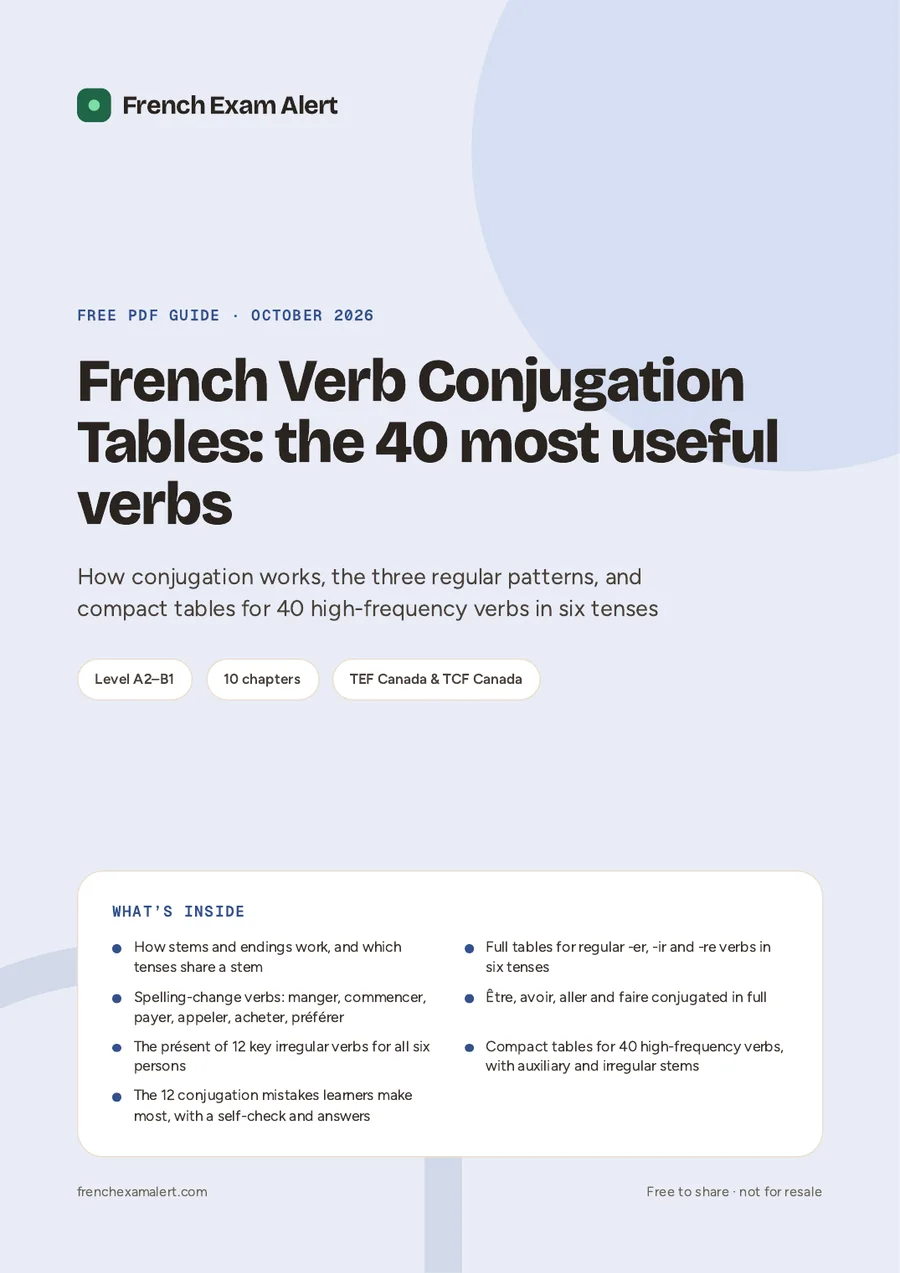
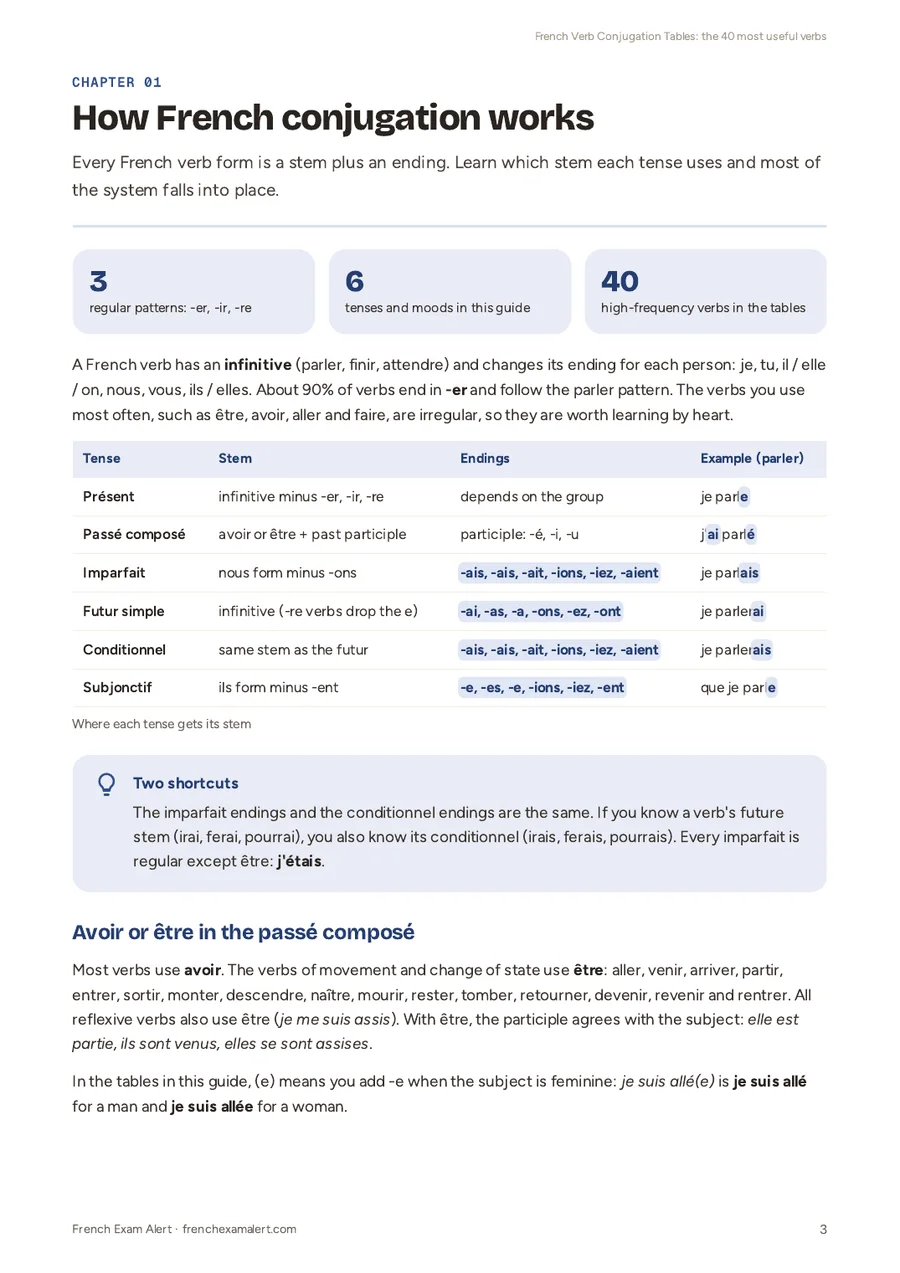
This free PDF explains how French conjugation works, gives the regular -er, -ir and -re patterns in full, and lists 40 of the most useful French verbs in the présent, passé composé, imparfait, futur, conditionnel and subjonctif. Every irregular form is spelled out, with the auxiliary for the passé composé and the stems that trip learners up.
What’s inside
- How stems and endings work, and which tenses share a stem
- Full tables for regular -er, -ir and -re verbs in six tenses
- Spelling-change verbs: manger, commencer, payer, appeler, acheter, préférer
- Être, avoir, aller and faire conjugated in full
- The présent of 12 key irregular verbs for all six persons
- Compact tables for 40 high-frequency verbs, with auxiliary and irregular stems
- The 12 conjugation mistakes learners make most, with a self-check and answers
Who it’s for: Learners from A2 to B2 who want one reliable reference for the verbs they use every day in TEF Canada and TCF Canada writing and speaking.
Contents
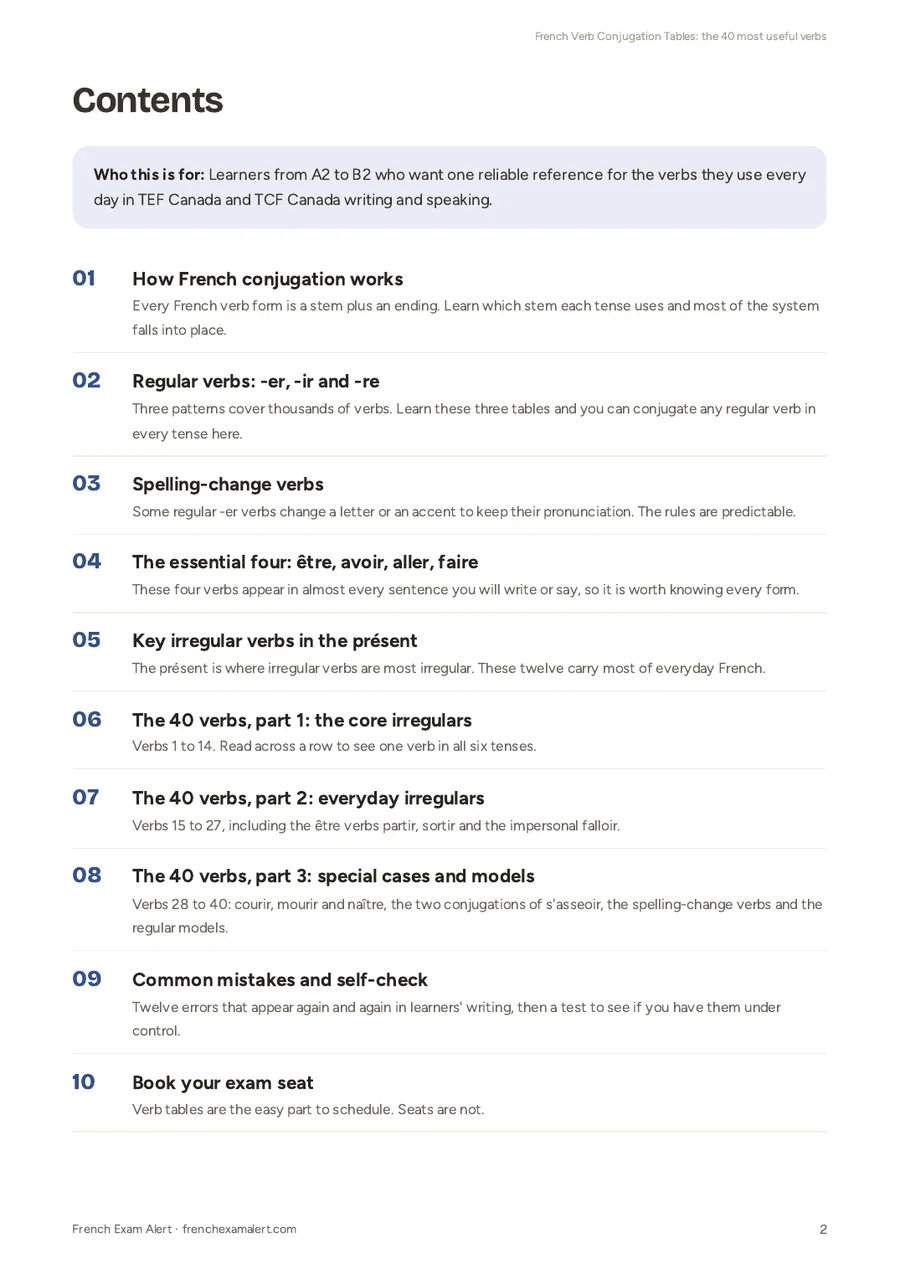
- 01How French conjugation worksEvery French verb form is a stem plus an ending. Learn which stem each tense uses and most of the system falls into place.
- 02Regular verbs: -er, -ir and -reThree patterns cover thousands of verbs. Learn these three tables and you can conjugate any regular verb in every tense here.
- 03Spelling-change verbsSome regular -er verbs change a letter or an accent to keep their pronunciation. The rules are predictable.
- 04The essential four: être, avoir, aller, faireThese four verbs appear in almost every sentence you will write or say, so it is worth knowing every form.
- 05Key irregular verbs in the présentThe présent is where irregular verbs are most irregular. These twelve carry most of everyday French.
- 06The 40 verbs, part 1: the core irregularsVerbs 1 to 14. Read across a row to see one verb in all six tenses.
- 07The 40 verbs, part 2: everyday irregularsVerbs 15 to 27, including the être verbs partir, sortir and the impersonal falloir.
- 08The 40 verbs, part 3: special cases and modelsVerbs 28 to 40: courir, mourir and naître, the two conjugations of s'asseoir, the spelling-change verbs and the regular models.
- 09Common mistakes and self-checkTwelve errors that appear again and again in learners' writing, then a test to see if you have them under control.
- 10Book your exam seatVerb tables are the easy part to schedule. Seats are not.
Look inside
Got your exam date yet?
TEF and TCF Canada seats at many centres sell out within minutes. Pick your cities and we alert you by email or WhatsApp the moment one opens.
Questions
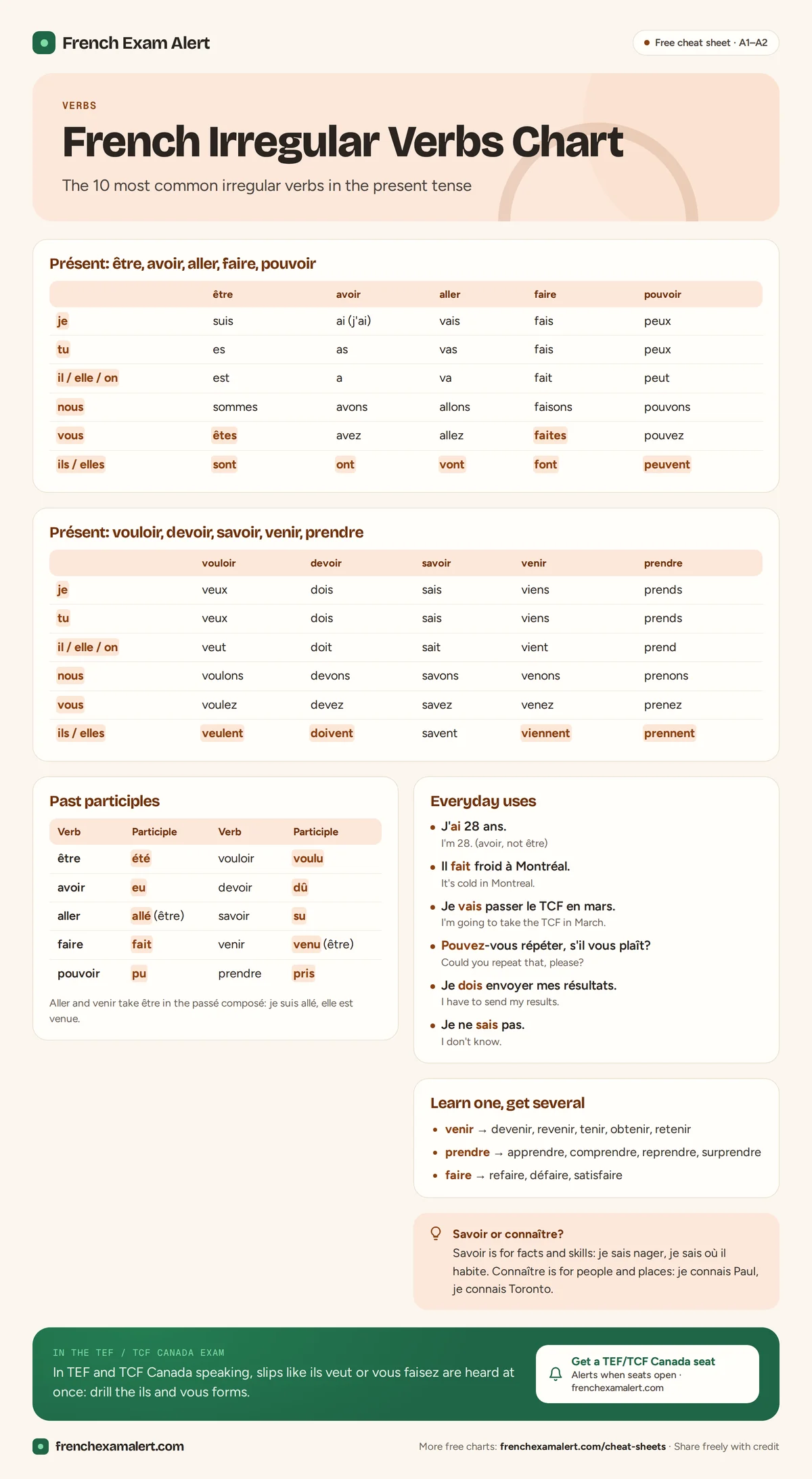
Start with être, avoir, aller and faire, then pouvoir, vouloir, devoir, savoir, venir and prendre. Together with the regular -er pattern, they cover most of what you say and write every day.
For writing and speaking at NCLC 7, you need the présent, passé composé, imparfait, futur proche and futur simple, conditionnel and the common uses of the subjonctif. The plus-que-parfait and conditionnel passé help at B2.
Both are correct. Verbs in -ayer can keep the y or change it to i before a silent e: je paie or je paye, je paierai or je payerai. Verbs in -oyer and -uyer always change to i: j'envoie, je nettoie, j'essuie.
Yes. Download it, print it and share it with your study group.
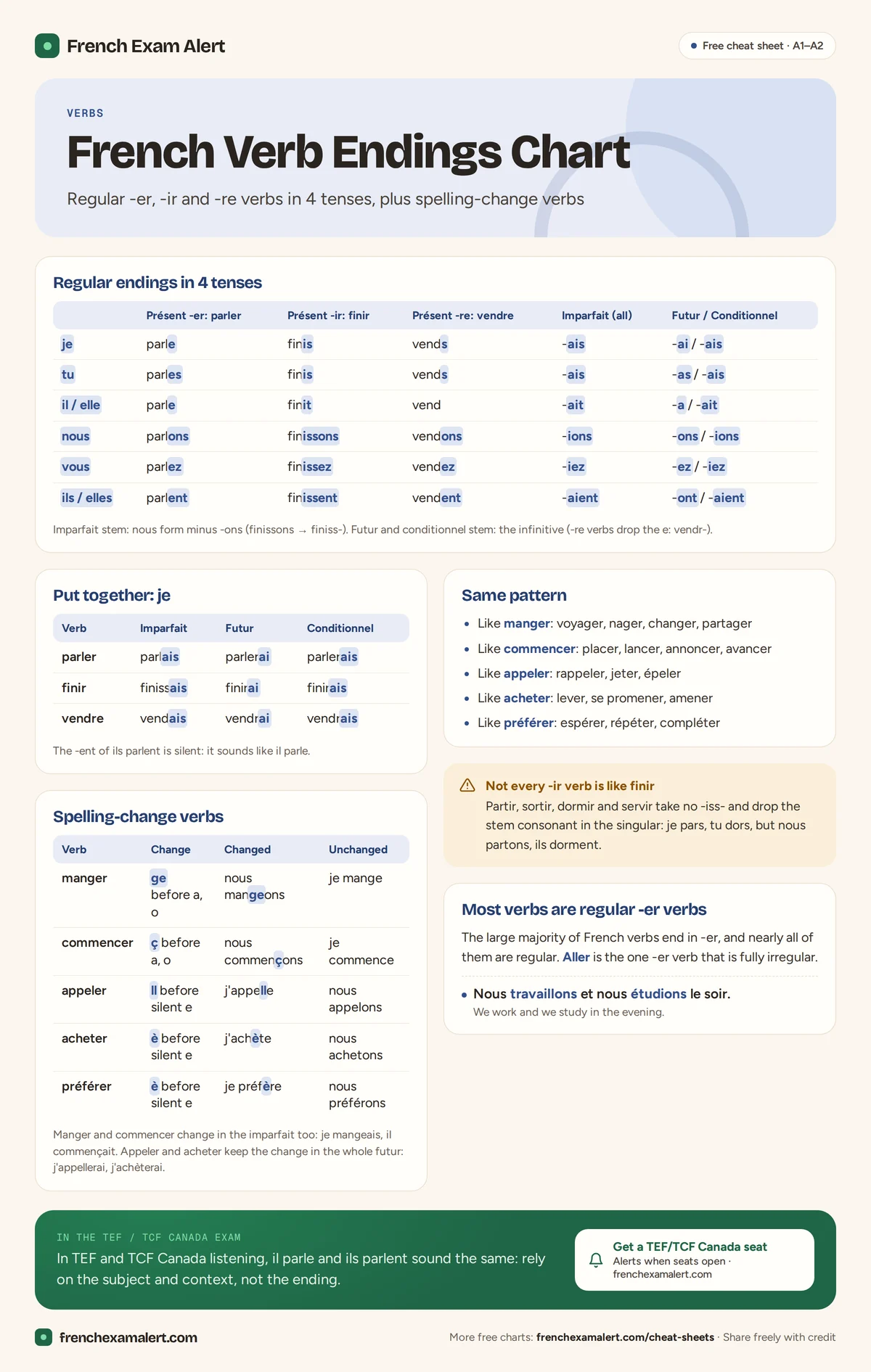
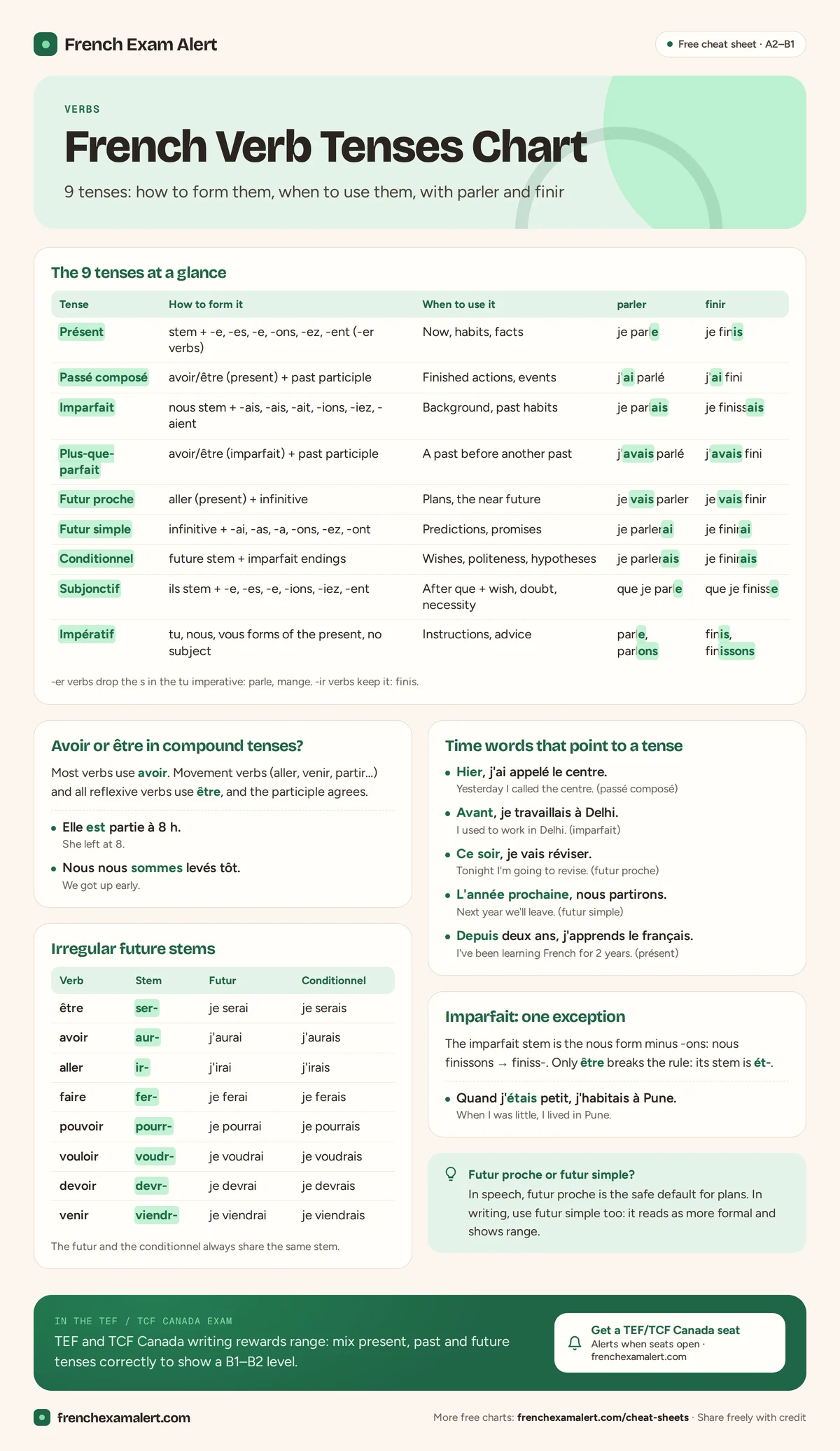
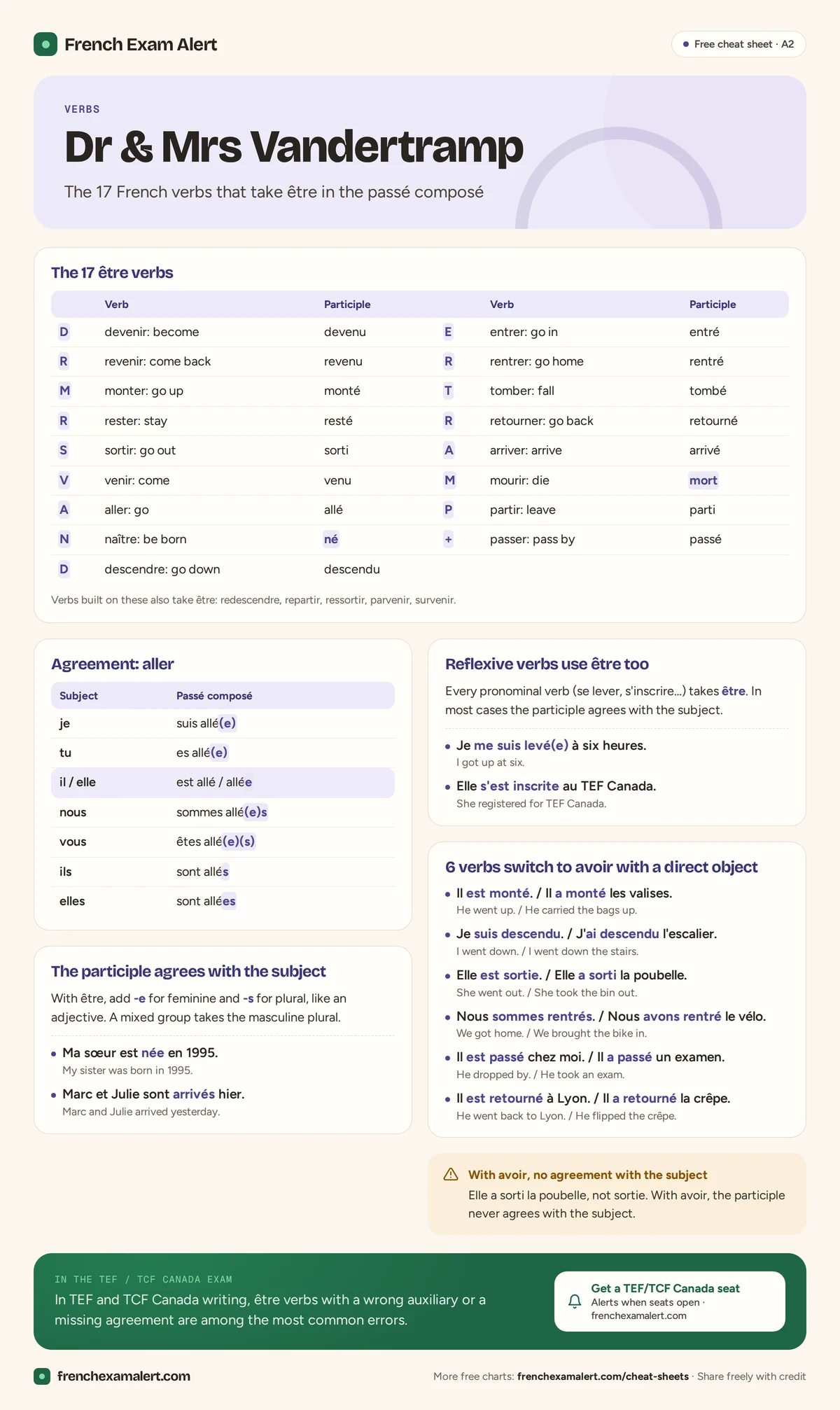
One-page cheat sheets to go with it
Related guides
TEF Canada writing and speaking: Sections A and B explained
200 words in 35 minutes, then 10 minutes to change a mind
Read the guide →TCF Canada writing: the 3 tasks, word counts and model answers
Three tasks, one clock, and a 10/20 that decides your CRS bonus
Read the guide →How long does it take to reach CLB 7 (NCLC 7) in French?
From B1, NCLC 7 can be 4–5 months away. From zero, over a year
Read the guide →More free PDFs
All PDF guides →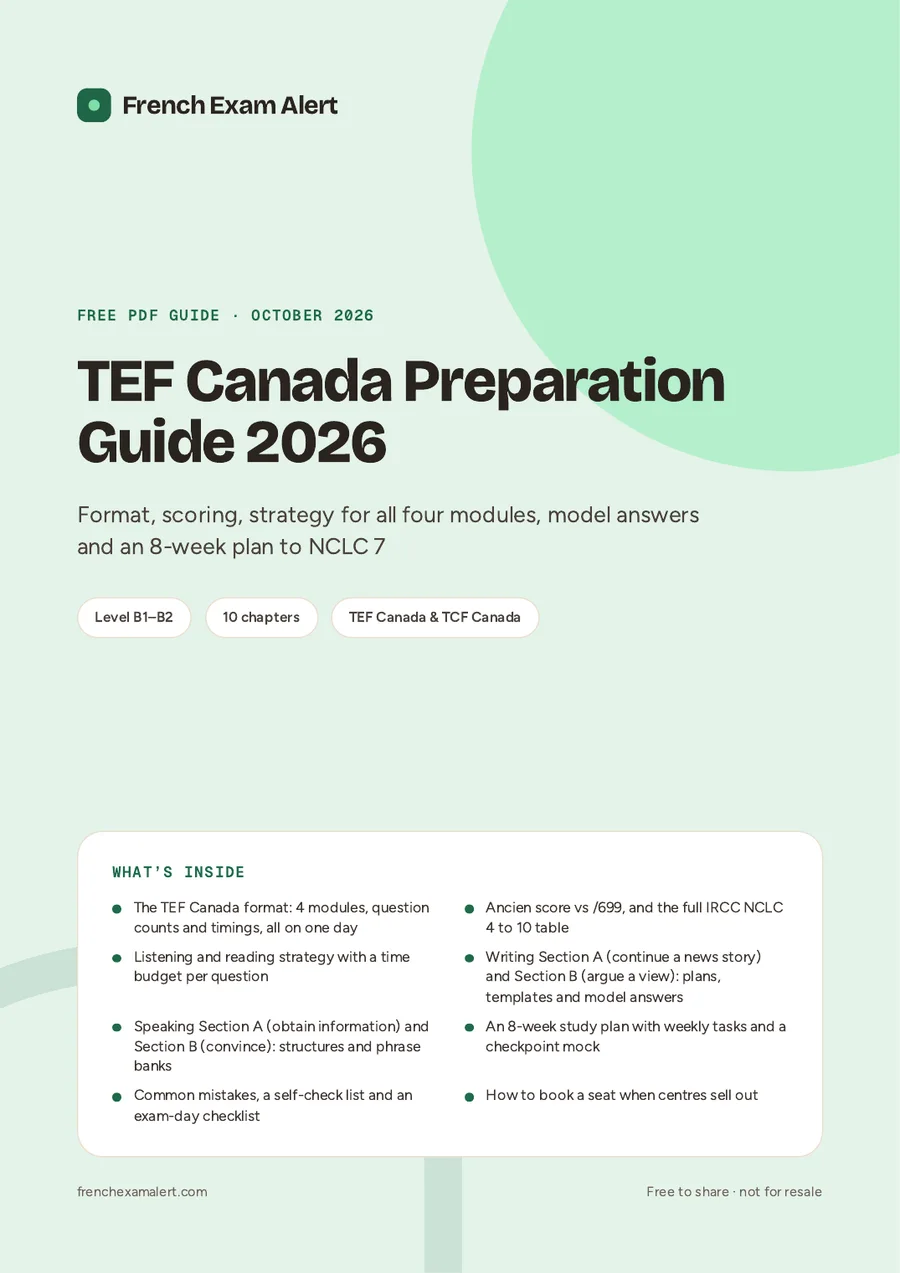 Free PDF · 26 pagesTEF Canada Preparation Guide 2026Format, scoring, strategy for all four modules, model answers and an 8-week plan to NCLC 7
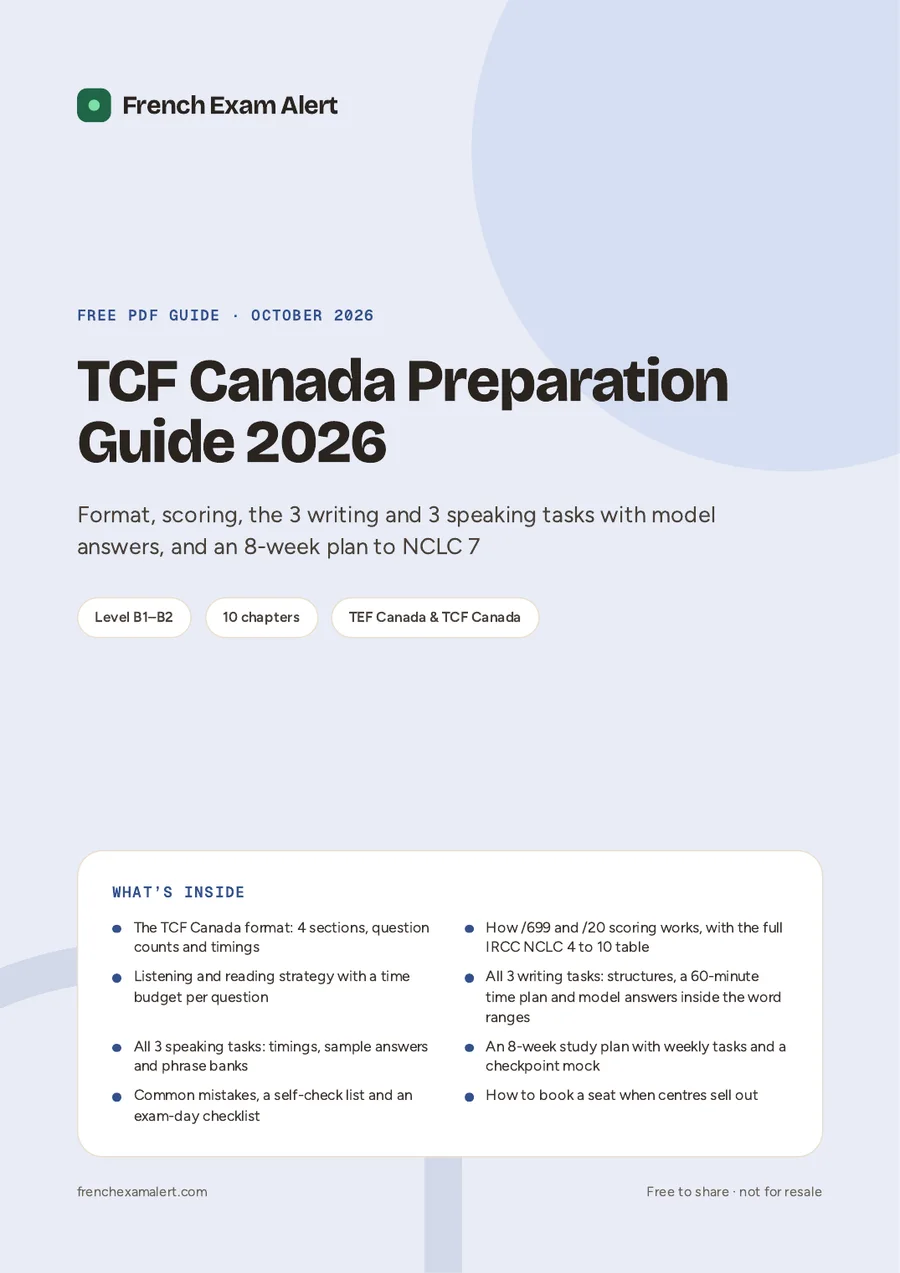 Free PDF · 24 pagesTCF Canada Preparation Guide 2026Format, scoring, the 3 writing and 3 speaking tasks with model answers, and an 8-week plan to NCLC 7
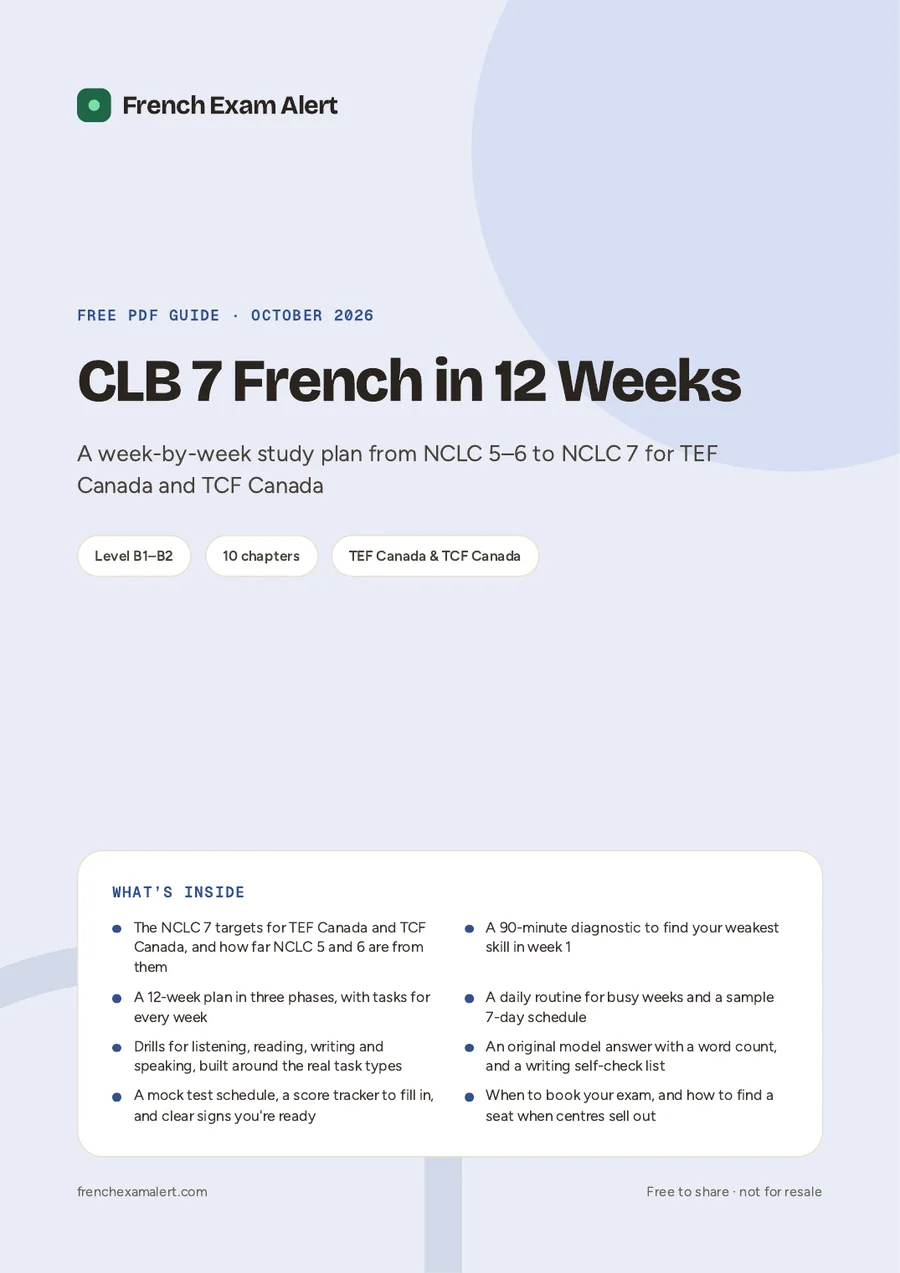 Free PDF · 26 pagesCLB 7 French in 12 WeeksA week-by-week study plan from NCLC 5–6 to NCLC 7 for TEF Canada and TCF Canada
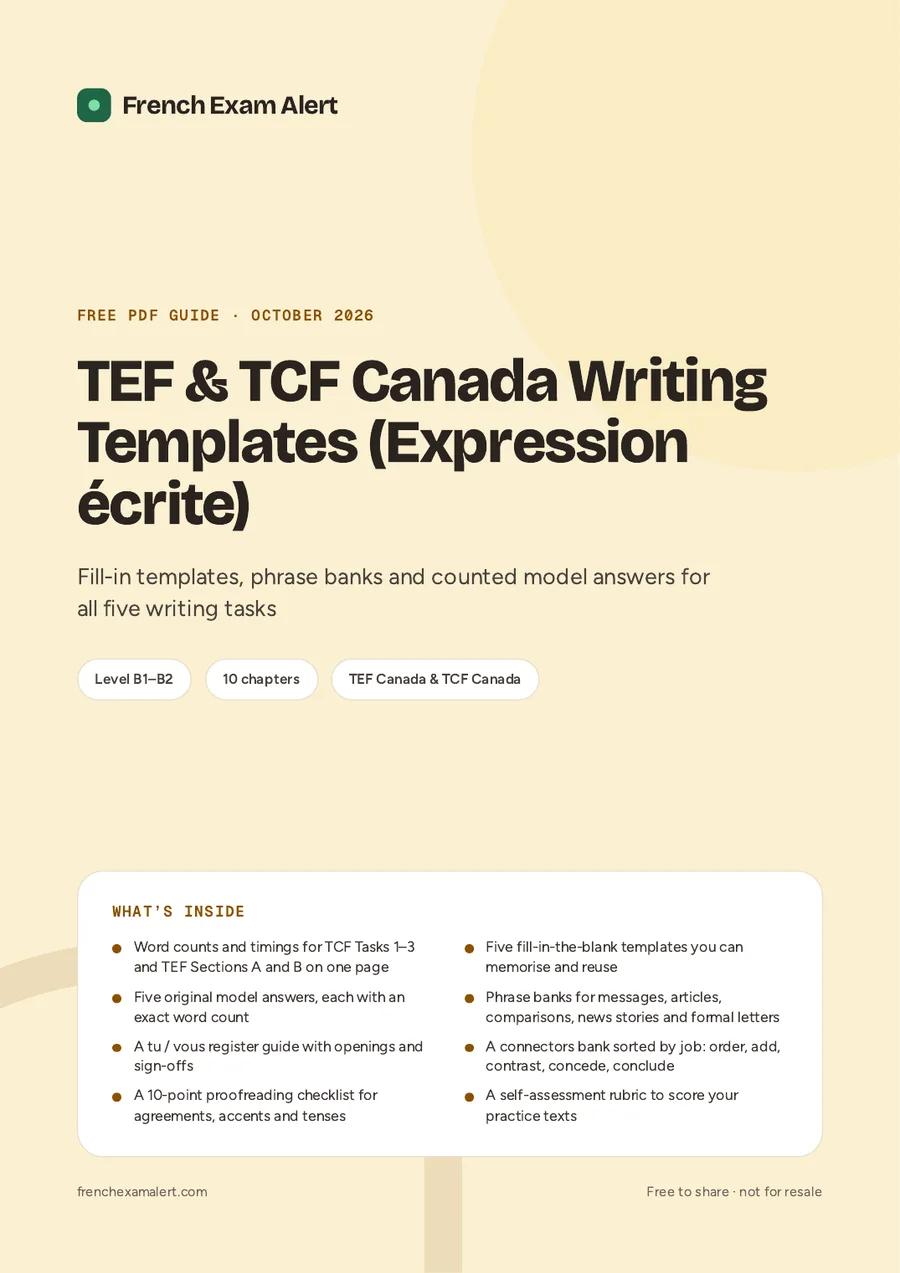 Free PDF · 28 pagesTEF & TCF Canada Writing Templates (Expression écrite)Fill-in templates, phrase banks and counted model answers for all five writing tasks